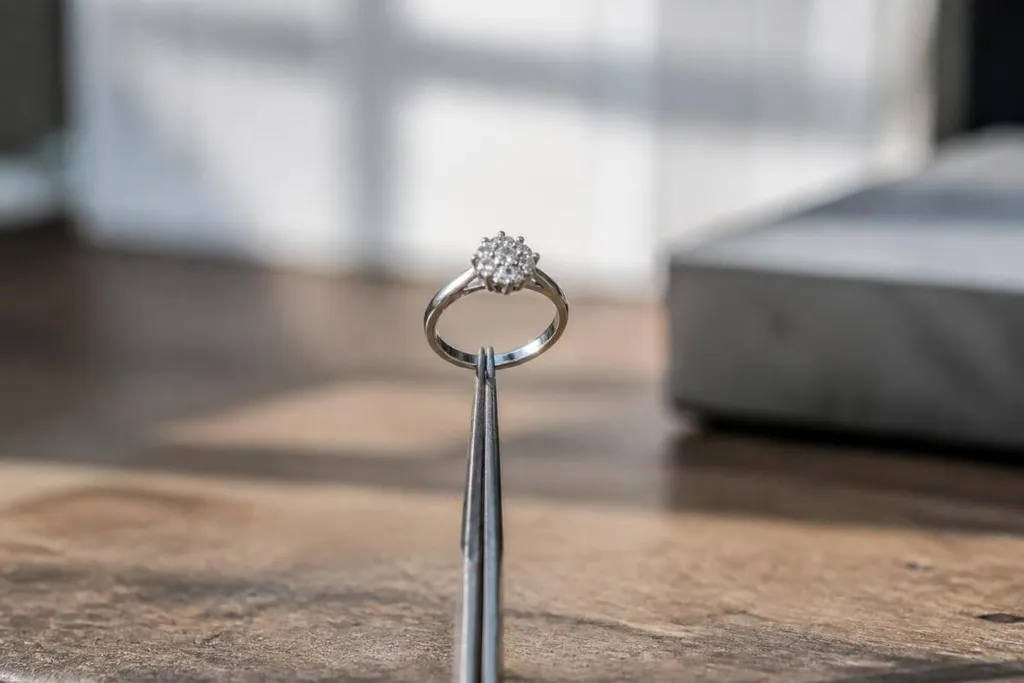
A solitaire creates impact by concentrating attention on one stone. A starburst cluster takes almost the opposite approach, building its character through multiple points of light radiating from a central diamond. The result can feel more decorative, dimensional and individual, particularly when diamond-set shoulders extend the sparkle beyond the central arrangement. Set against warm yellow gold, this style combines contemporary brilliance with the richness of a traditional precious metal.
For someone considering an alternative to a conventional solitaire, the option to order the yellow gold Ayla ring from Lily Arkwright illustrates how a round lab-grown diamond, starburst cluster, shoulder-set detailing and 18k yellow gold can work as one composition. Its presence comes from the complete arrangement rather than asking a single centre stone to provide all the visual scale.
Why a Starburst Cluster Feels So Different
The defining feature of a starburst design is its outward movement. Instead of creating a uniform border around the centre, surrounding diamonds form a more expressive silhouette that suggests rays of light.
This changes how the ring is perceived from above. A traditional halo tends to make the centre stone appear larger while preserving a relatively regular outline. A starburst cluster is more obviously decorative, allowing the surrounding diamonds to become part of the design's identity.
That makes it appealing to someone who wants greater finger coverage without simply increasing the carat weight of one diamond. A larger solitaire may provide impressive scale, but its visual language remains deliberately simple. A cluster distributes brilliance across a broader area and creates detail that can be appreciated at different distances.
The round centre diamond provides an important anchor. Its symmetry gives the composition a stable focal point, allowing the more intricate surrounding arrangement to feel balanced rather than visually restless.
Shoulder-Set Diamonds Extend the Sparkle
A starburst centre already carries considerable detail, but diamond-set shoulders can help integrate that focal point with the band.
Without shoulder stones, a highly decorative cluster can sometimes appear visually separate from a plain shank. Adding diamonds along the shoulders creates a gradual transition, carrying brightness from the centre towards the sides of the finger.
Proportion remains important. If the shoulder diamonds become too dominant, the ring can lose its clear hierarchy. The eye should still recognise the central cluster first, with the shoulder setting supporting it.
This distribution of stones also provides a different type of presence from a single large diamond. Someone may prefer a cluster and shoulder-set design because they enjoy sparkle across the whole upper surface of the ring rather than one concentrated flash.
It is an aesthetic decision rather than simply a question of total carat weight.
Why Yellow Gold Gives the Design Definition
With numerous diamonds positioned close together, the choice of metal can significantly affect the ring's character.
White metals tend to blend visually with colourless diamonds, creating a more continuous field of brightness. Yellow gold introduces warmer separation. Glimpses of the 18k gold between and around the diamond-set elements can make the structure of the design easier to appreciate.
That contrast also prevents a highly sparkling ring from feeling entirely cool-toned. The gold adds richness and connects an expressive modern cluster with a metal long associated with traditional fine jewellery.
For someone who already wears yellow gold, the choice also makes coordination straightforward. A plain yellow gold wedding band can provide a calm visual counterpoint, while a diamond-set band can create a more elaborate bridal stack.
Because the engagement ring already contains substantial detail, there is no requirement for the accompanying band to be equally decorative.
Consider Everyday Wear and Long-Term Care
A cluster ring contains more individual settings than a simple solitaire, making ongoing care particularly important.
Each smaller diamond needs to remain securely held, and shoulder-set stones experience regular exposure to everyday contact. Periodic professional inspections can help identify worn settings before they become problematic.
Cleaning matters too. Lotions, soaps and other residue can collect between closely arranged diamonds and reduce the contrast that gives the starburst design much of its brilliance.
The profile of the cluster should also be considered when selecting a wedding band. Depending on its shape and setting structure, a straight band may leave some space between the rings, while a shaped design can follow the cluster more closely.
For daily wear, the best combination is one that feels comfortable as well as visually cohesive.
Final Thought
A starburst cluster engagement ring offers a genuinely different alternative to solitaire design. Instead of relying on one diamond for impact, it creates presence through composition combining a central round lab diamond with radiating stones, diamond-set shoulders and the warmth of 18k yellow gold.
For someone who values intricate detail and abundant sparkle, that approach can feel more personal than simply choosing a larger centre stone. The result remains recognisably an engagement ring, but with a silhouette and character distinctly its own.